

Recruiting operations
Best Resume Parser Software: 10 Tools Compared
Compare resume parser software for staffing and hiring teams. See how 10 tools differ in parsing, matching, workflows, and fit.
Resume parser software turns resume text into candidate data your team can search and use. But parsing is only part of the job. For US IT staffing teams placing consultants into contract roles, WiseMatcher pairs existing resumes with relevant opportunities and gives you reasons to review each match.
Here are 10 options, starting with WiseMatcher, followed by tools with different parsing and recruiting workflows.
1. WiseMatcher
WiseMatcher is a self-serve SaaS platform for US IT staffing and consulting firms. It finds US contract opportunities and matches them to consultants already in your talent pool. It’s a fit for recruiters and bench managers who need to find the next assignment for available consultants.
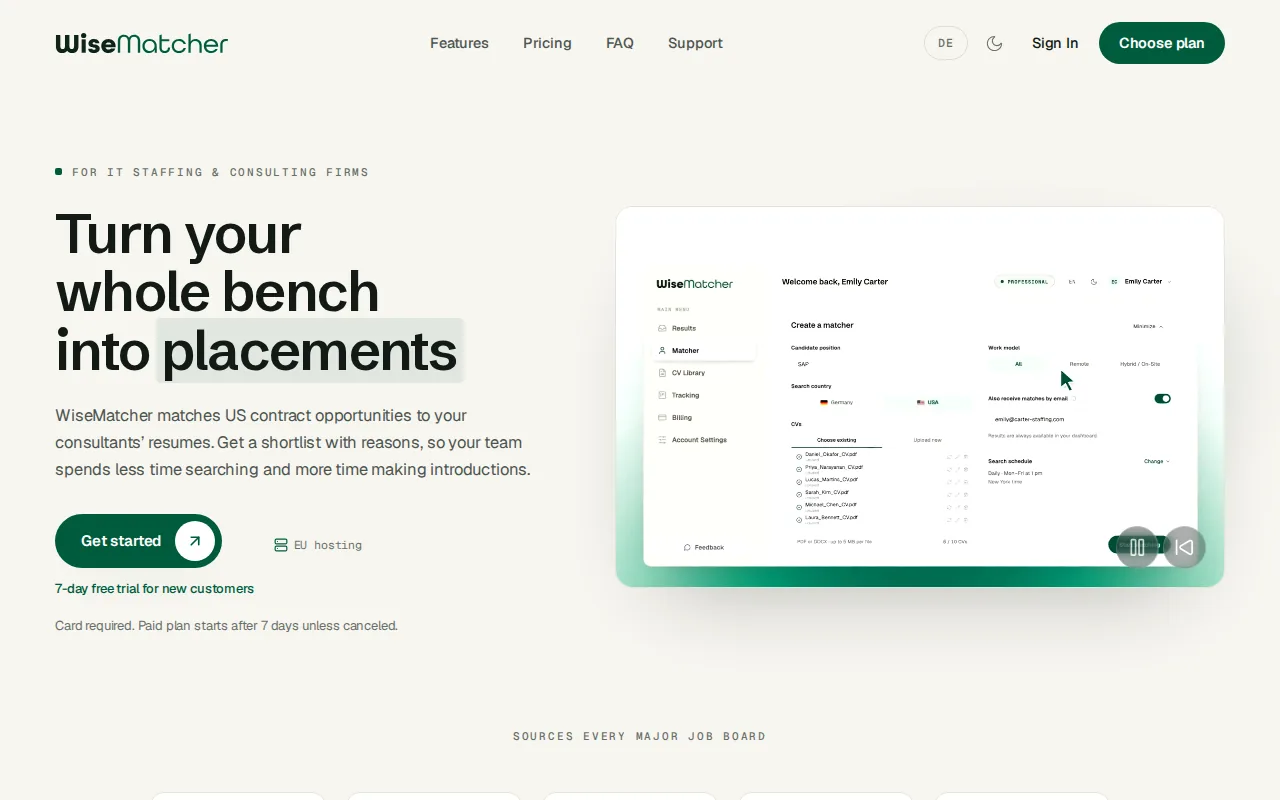
AI matching compares an opportunity’s requirements with a consultant’s skills and project experience, then gives you a shortlist with reasons. WiseMatcher can send optional email alerts, draft outreach for you to edit, and track prospects in a candidate opportunity pipeline. Your team reviews the matches and decides what to send.
All plans include US contract sourcing and AI matching. A seven-day trial requires a card, and your selected paid plan starts automatically unless you cancel before the trial ends. Choose a plan based on the consultants and searches you manage. See WiseMatcher’s plans and trial terms before signing up.
For teams focused on placements rather than resume intake alone, this is the closest fit on the list.
2. RChilli Resume Parser: Deep-learning extraction for recruiting workflows
RChilli Resume Parser is an API that turns resumes into structured candidate data. It’s suited to recruiting platforms and HR teams that need to add parsing to an existing system.
RChilli’s parser uses deep learning to identify, extract, and organize resume information, and it supports many languages.
For a team building its own intake flow, an API can move extracted details into a downstream system. You’ll still want to test it with the resume formats and fields your recruiters see most.
3. hireEZ: Parsing paired with AI sourcing and collaboration
hireEZ combines resume parsing with AI sourcing, flexible integrations, and team collaboration tools. It’s aimed at companies of different sizes that want sourcing to play a central part in recruiter workflows.
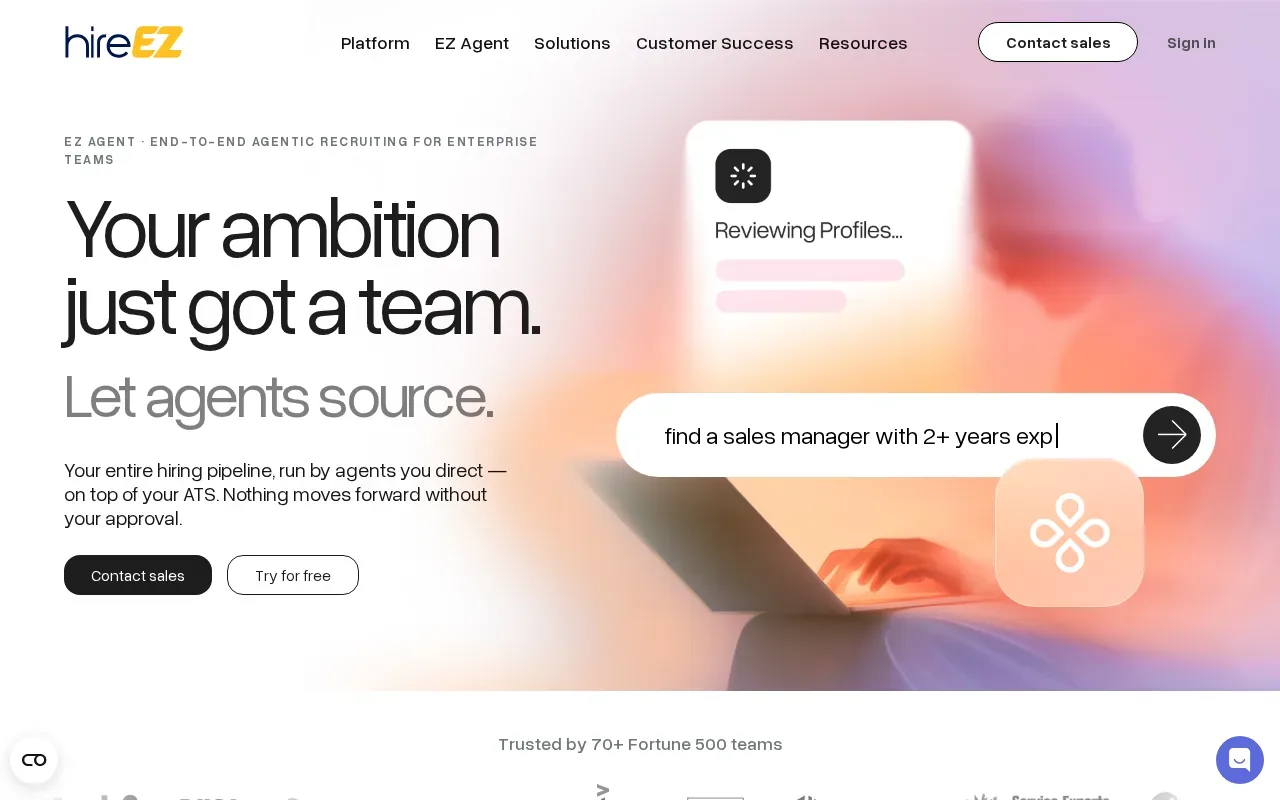
That mix may suit a team that needs to work with candidates beyond the resumes already in its database. Parsing can help organize candidate information, while sourcing supports the search for people who may fit an open role. Collaboration tools give recruiters a shared way to work on candidate activity.
Before choosing it, map where parsing fits in your process. If the main need is matching consultants already on your bench to US contract roles, compare that workflow with a tool built around contract sourcing and explained matches.
4. HireAbility: Language-processing technology for varied recruiting systems
HireAbility analyzes resumes with language processing, pattern recognition, and AI. It’s best suited to teams that use different recruiting platforms and need parsing to fit into an existing system.
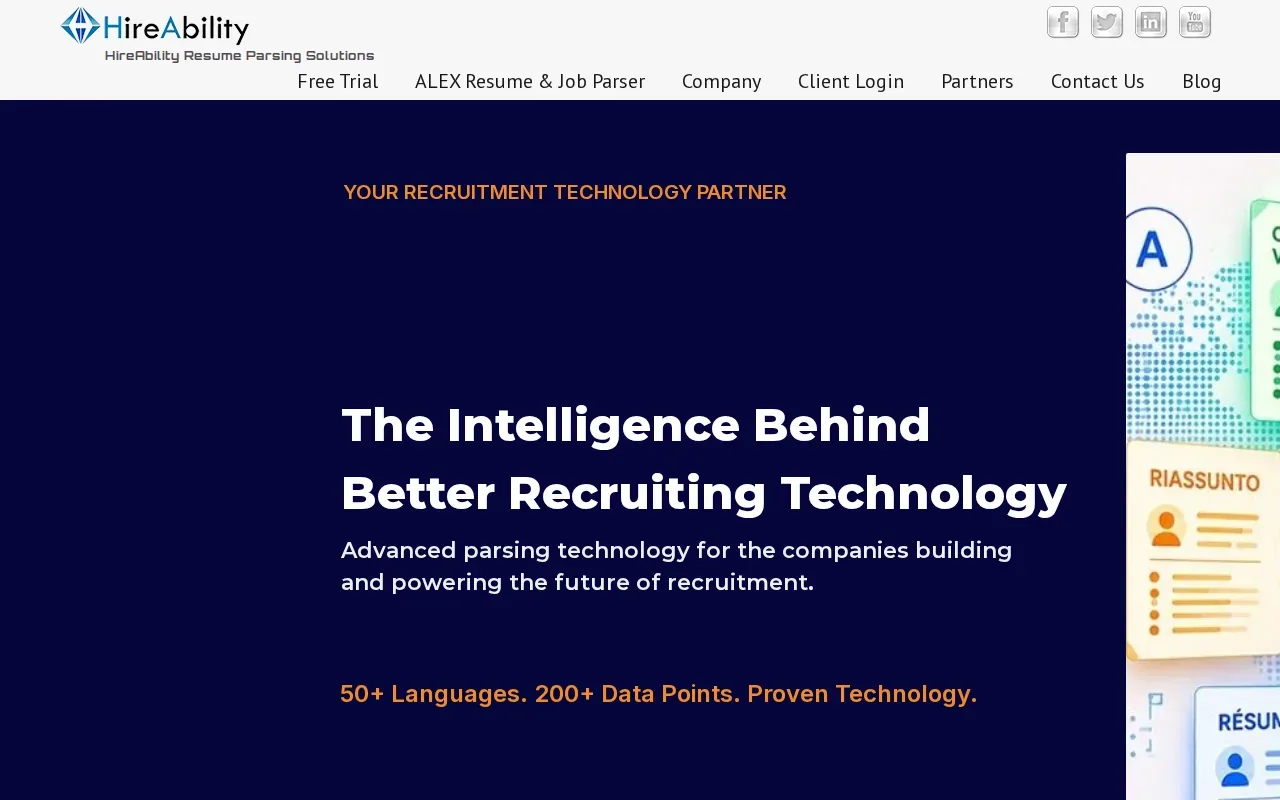
HireAbility converts free-form resume text into structured data. The structured profile can then support search and candidate-to-job matching.
A parser can sit between an application and a database. That can make it relevant when a team is building or maintaining its own recruiting workflow. Check how the parsed fields map to your current records before you roll it out across the team.
5. Oorwin: Talent acquisition and workforce management in one platform
Oorwin is an AI-powered talent acquisition and workforce management platform. It’s aimed at staffing agencies, consultancies, and HR teams that want talent workflows in one system.
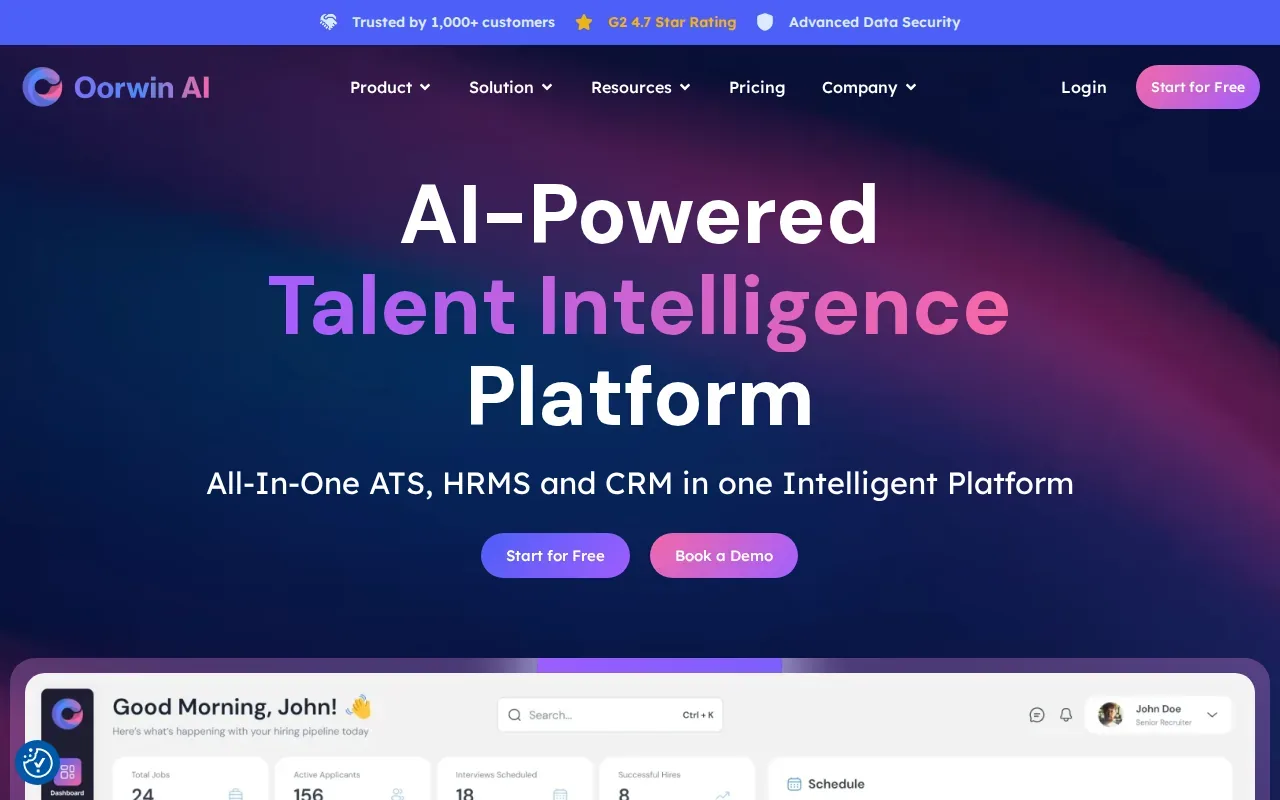
Oorwin helps organizations source, manage, and sell talent. Its broader platform may suit organizations that need to manage hiring alongside wider talent operations.
Oorwin’s broader scope can be useful if your team wants more than resume intake. If your immediate task is filling contract roles from a known group of available consultants, check that its sourcing flow matches that specific need.
6. Sovren Resume Parser by Textkernel: Parsing for multilingual recruiting needs
Sovren Resume Parser by Textkernel parses resumes and job postings. It’s a fit for recruiting teams that handle multiple languages or want structured data to support search and matching.
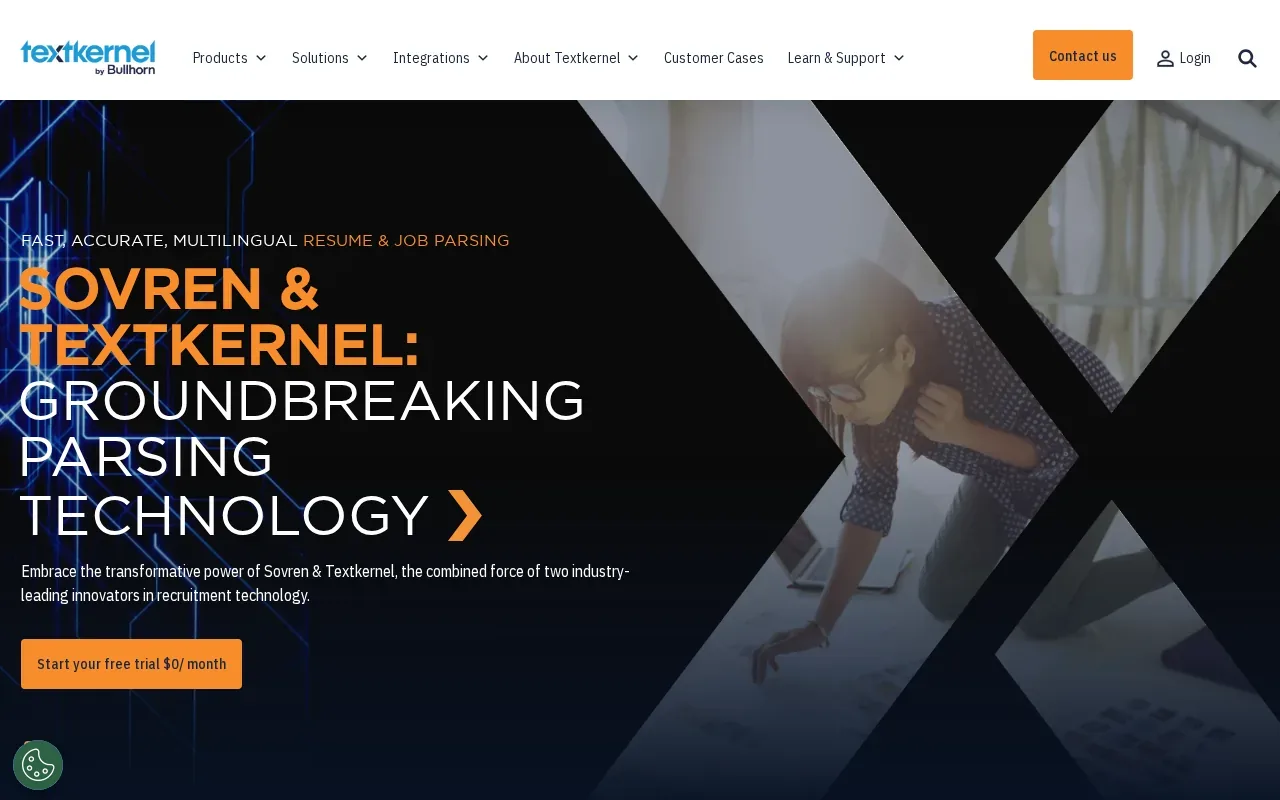
The parser extracts data from resumes in 29 languages and job postings in nine.
The combined parsing tools also support candidate matching and search. If multilingual intake is a regular part of your work, test how the parser handles the languages and document styles your team receives. A language count alone won’t tell you how well it handles your own files.
7. CVViZ: AI recruitment software to assess for parsing workflows
CVViZ is AI recruitment software with resume parsing and screening. It’s suited to teams that want candidate review and an applicant tracking workflow in the same product.
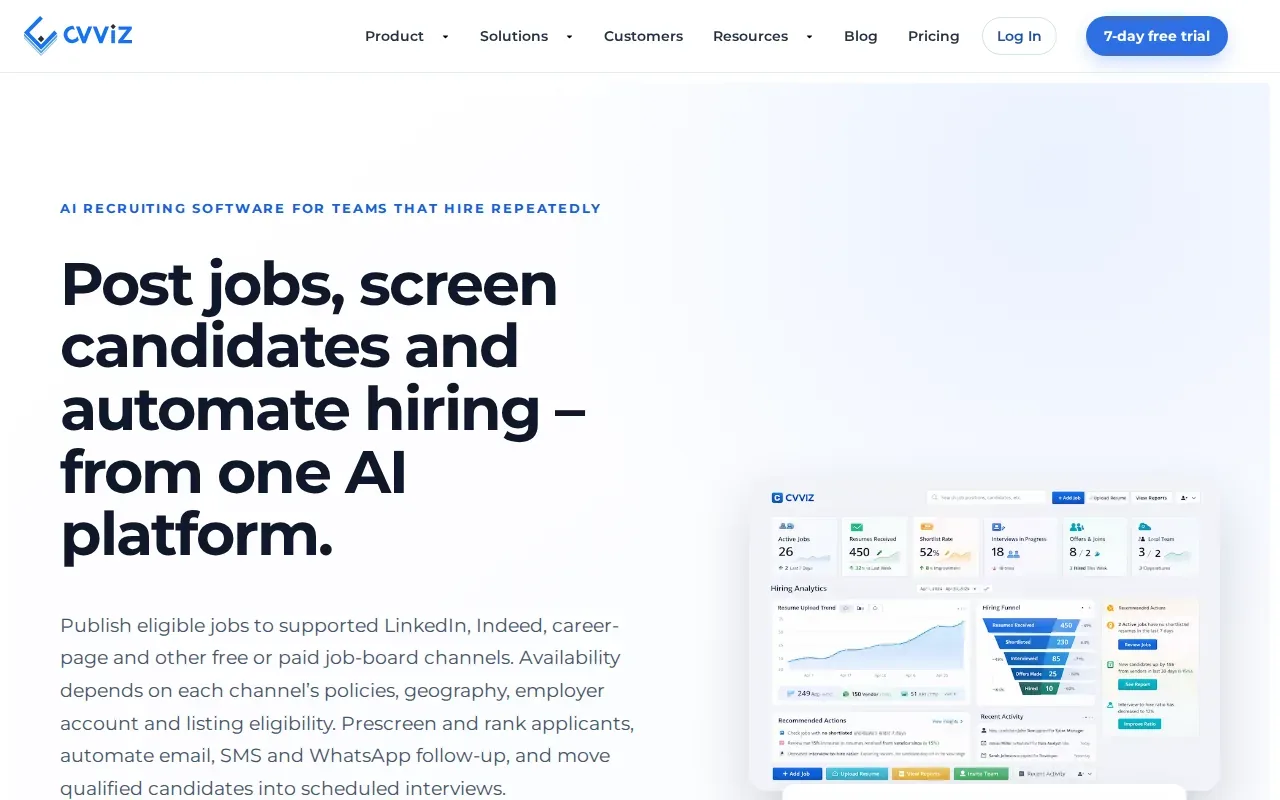
Its capabilities include resume screening and ranking, alongside an ATS pipeline. This setup may be worth assessing if recruiters want to review ranked candidates inside their existing hiring process.
Check whether the plan’s job limits and monthly credits fit your expected workload. Then test the parser with sample resumes and compare its extracted fields with what recruiters need to see before shortlisting.
8. Manatal: AI recruitment software for agencies and HR teams
Manatal is AI recruitment software for HR teams, recruitment agencies, and headhunters. Teams can compare its fit with their hiring needs and recruitment workflows.
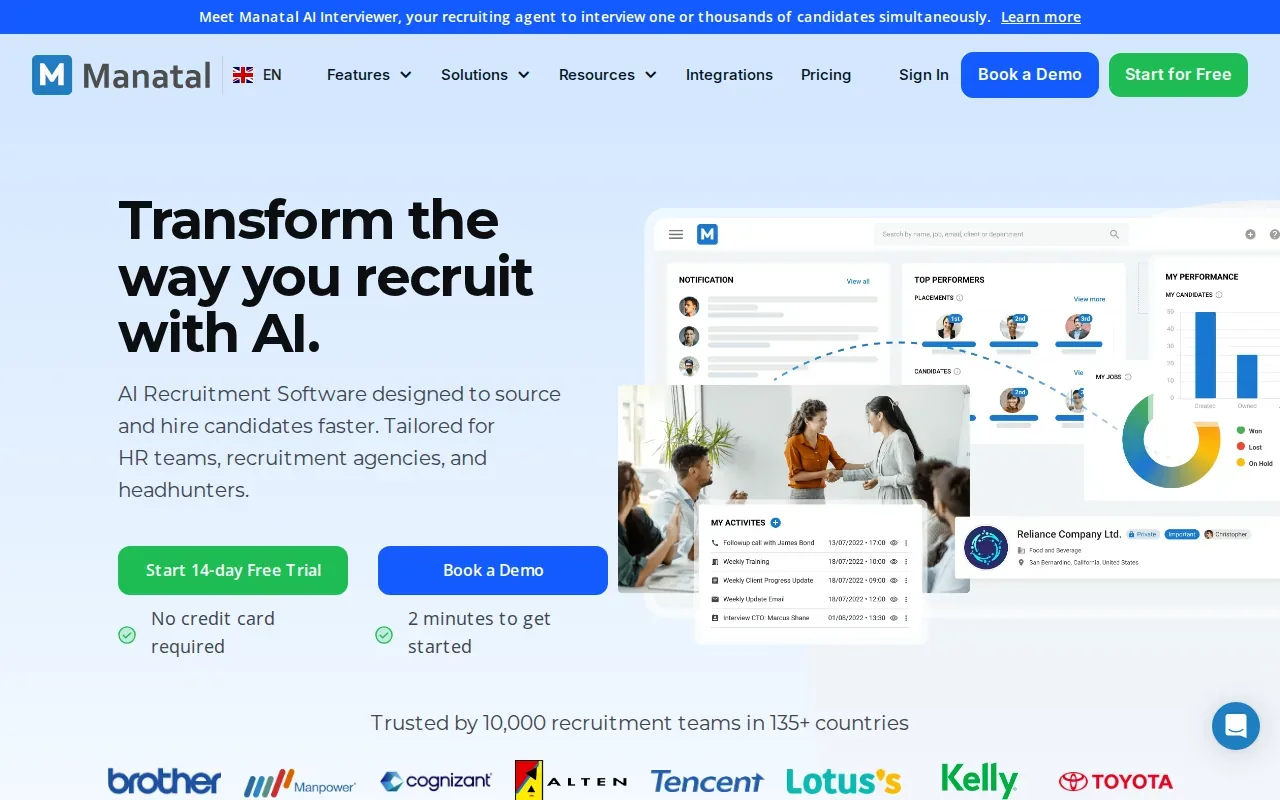
For an agency, compare the candidate record and pipeline with the steps your recruiters use each day. A tool centered on hiring workflows may suit a different need than a service focused on finding contract openings for consultants already on the bench.
9. Recruit CRM: ATS and CRM workflows for growing recruitment firms
Recruit CRM combines ATS and CRM workflows for recruitment firms. It’s designed for growing teams that want candidate records and recruiting activity managed in one platform.
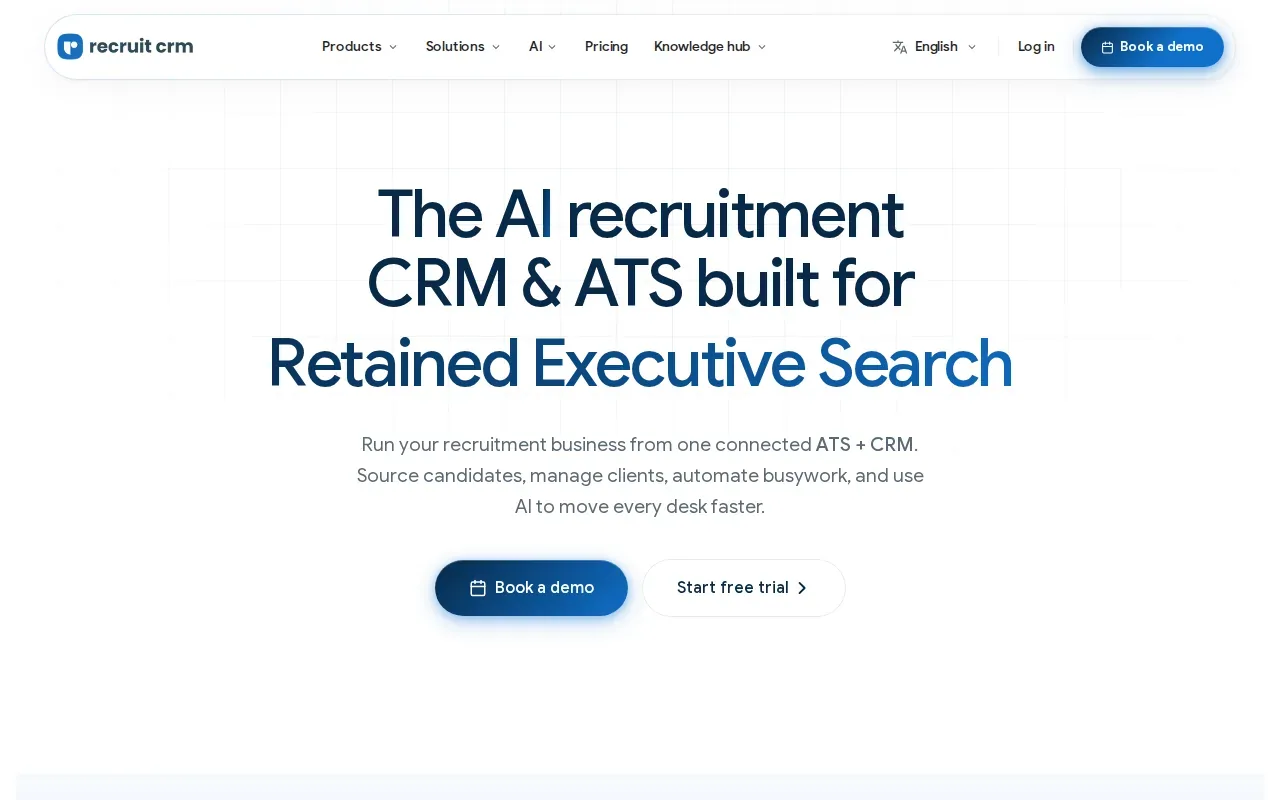
Its AI resume parser can extract candidate details and create a profile. A Custom Field Parser Agent can also fill custom fields from resumes.
The parser can also process resumes from application forms and talent pool forms. That may help teams keep inbound records organized. Review how duplicate checks and profile updates work before importing a large batch, especially if your database has older or incomplete records.
10. Workable: Recruiting and HR platform with resume parsing
Workable is a recruiting and HR platform. It’s intended for teams that want one system to support hiring and wider HR work.
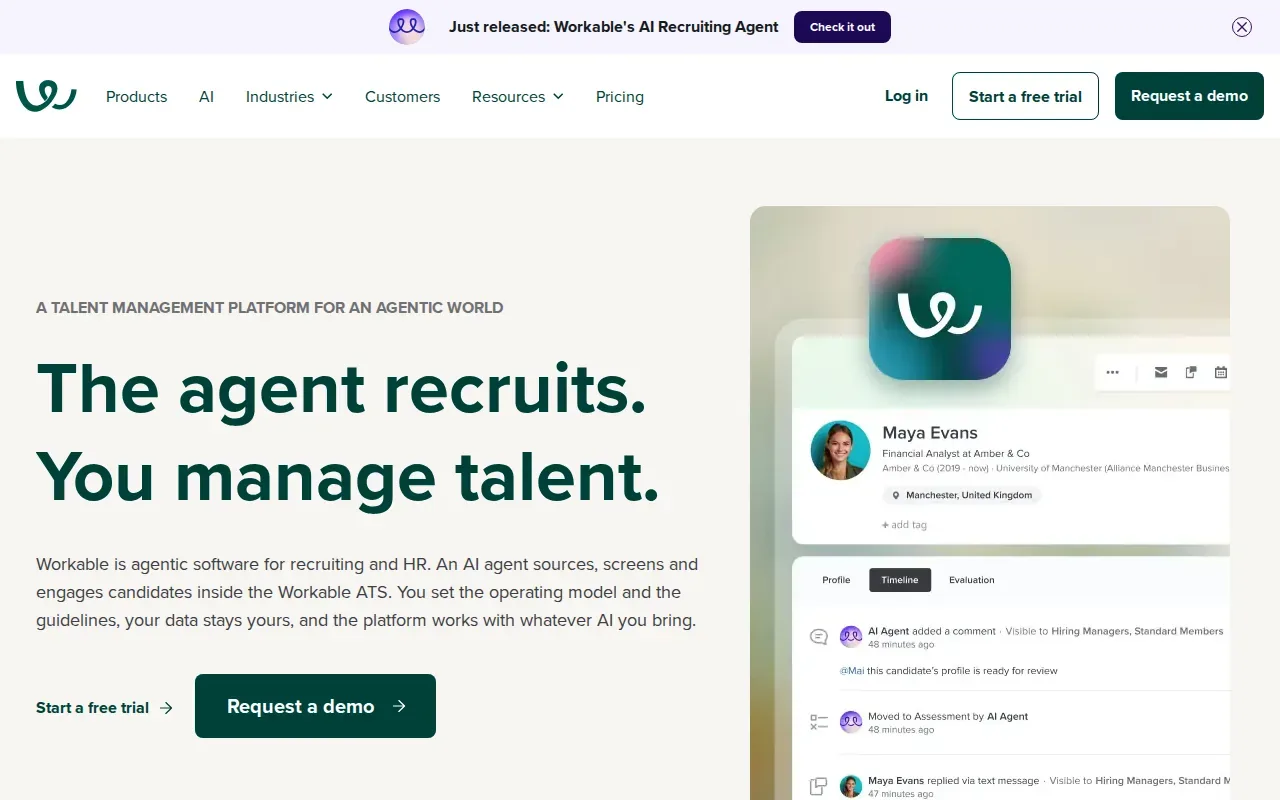
Workable stores all HR data as a single system of record, alongside a full applicant tracking system. For teams assessing resume parsing, the key question is how parsed candidate information fits into the hiring stages and records your recruiters already use. Check the workflow with your own job applications and resume files rather than relying on a feature label alone.
Workable’s broad HR scope may suit a team that wants recruiting connected to other people operations. If you mainly need to match existing consultants with contract opportunities, compare that purpose with WiseMatcher’s focus on US contract sourcing.
Resume Parser Software Comparison: At-a-Glance Differences
These tools address different tasks. Some focus on extracting resume fields through an API. Others combine parsing with an ATS or a wider talent platform. WiseMatcher takes a different route by matching existing consultant resumes to US contract roles and showing why each opportunity may fit.
| Option | Best-fit workflow | What to assess |
|---|---|---|
| WiseMatcher | US contract sourcing for existing consultants | Match reasons, alerts, outreach drafts, pipeline |
| RChilli Resume Parser | API-based resume data extraction | Field mapping and file formats |
| hireEZ | Parsing with sourcing and collaboration | How sourcing fits the recruiter workflow |
| HireAbility | Parsing across varied recruiting systems | Integration and data mapping |
| Oorwin | Talent acquisition and workforce management | Fit across staffing operations |
| Sovren Resume Parser by Textkernel | Multilingual resume and job parsing | Language and file testing |
| CVViZ | ATS-based parsing and screening | Credit and job limits |
| Manatal | Recruitment agency and HR hiring workflows | ATS fit and access controls |
| Recruit CRM | ATS and CRM with candidate parsing | Duplicate checks and profile updates |
| Workable | Recruiting within a broader HR system | How parsing fits hiring records |
A parser turns resume content into structured fields, but a structured record is only useful if your team can act on it. For WiseMatcher, the next action is to review an opportunity shortlist and decide which consultants to introduce.
What to Check Before Buying Resume Parser Software
Start with the job you need the software to do. If recruiters spend time entering resume details, test field extraction. If they spend time searching for available assignments, test contract sourcing and match explanations instead.
Then review these points with your team:
- Match quality: Test a set of real resumes against real role requirements. Check skills, project experience, and the reasons behind each result.
- Integration: Ask whether the tool uses an API, a hosted connection, or another setup. Confirm which records move between systems and who handles errors.
- Security: Ask where candidate data is stored, who can access it, how long it is kept, and how deletion works. Review data-protection guidance when assessing safeguards.
- Human review: Keep recruiters responsible for checking extracted details and deciding who to contact. Automated results should support judgment, not replace it.
- Cost and value: Compare subscription terms or usage charges with the time your team spends on manual intake and searching. WiseMatcher plans vary by the number of consultants and searches you manage.
For hiring decisions that use automated assessments or filters, review how the system affects candidate selection. Consider this employment-selection resource. Data rules also depend on your situation, so get legal advice for your own process.
FAQ
What does resume parser software do?
Resume parser software turns resume content into structured fields, such as skills, work history, or education. A recruiting team can use those fields to search records or fill candidate profiles. Some products add screening or matching. The right fit depends on whether your main bottleneck is data entry, candidate search, or finding opportunities for consultants already in your talent pool.
How does AI resume parsing work?
AI resume parsing uses language-processing methods to identify information in a resume and place it into defined fields. For example, it may distinguish a job title from a skill or an employer from a project. Results still need review, since layouts and wording vary. Test sample resumes from your own recruiting flow before you rely on parsed data.
Can a resume parser match candidates to jobs?
Some tools support matching as well as extraction. A parser structures resume and job details, while matching compares relevant information such as skills or experience. WiseMatcher applies AI matching to consultants’ resumes and US contract opportunities, then gives users reasons to assess each suggested fit. Recruiters remain responsible for reviewing candidates and deciding whether to make an introduction.
What should staffing agencies check before choosing a parser?
Staffing agencies should check field accuracy, workflow fit, integration needs, data controls, and how recruiters review results. Test the tool with resumes and role requirements the team recognizes. If your agency places existing consultants into contract roles, also check whether the product finds relevant opportunities and keeps a clear pipeline for follow-up.
Conclusion
For US IT staffing and consulting teams matching existing consultants to contract work, WiseMatcher is the most direct fit in this shortlist. Review its plans, then start the seven-day trial to test opportunity matches with your own consultant profiles. Your team reviews every match and controls outreach.